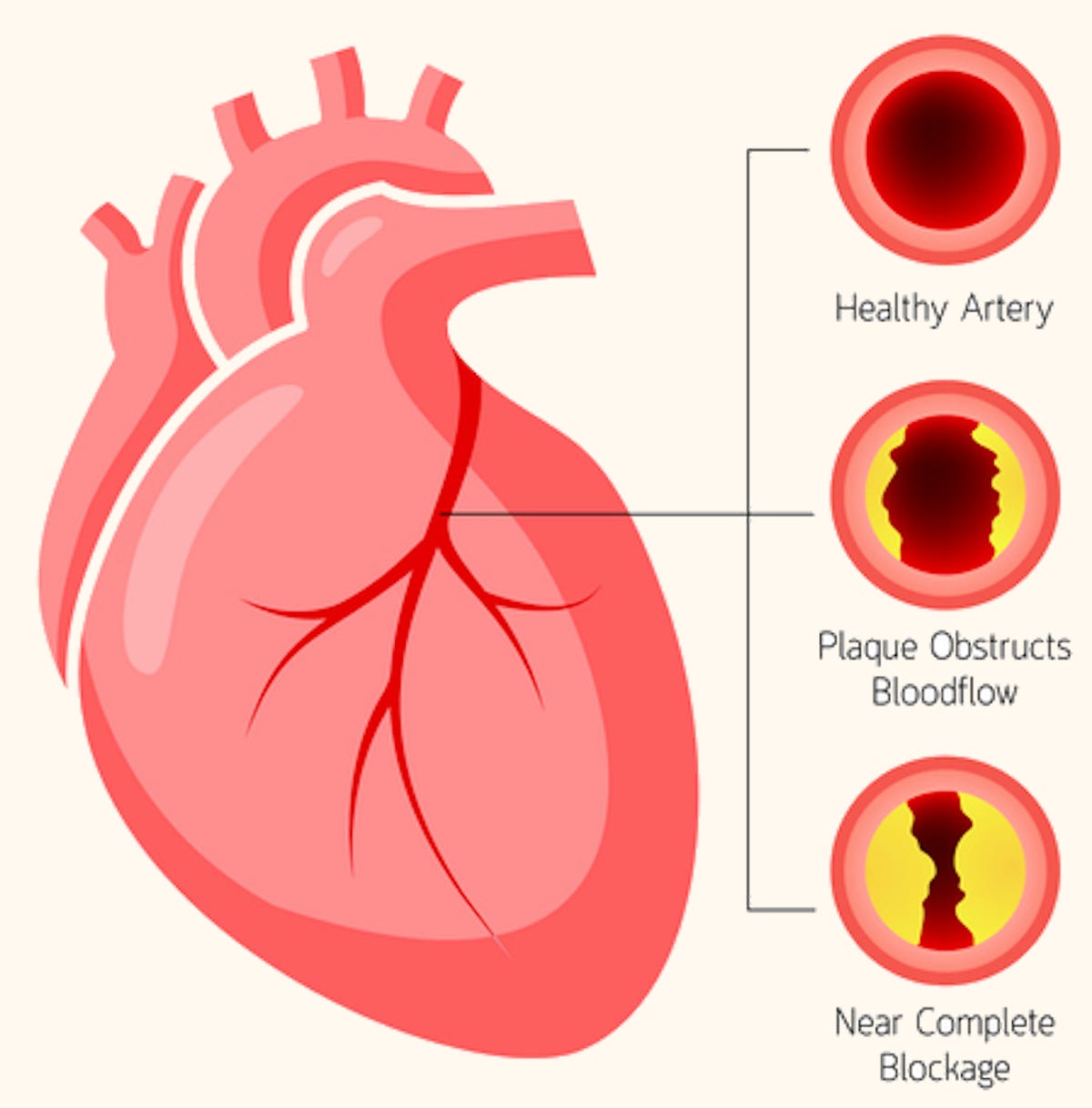
Coronary artery diseases (CAD) occurs when the arteries that supply the heart muscle become narrowed, thickened, and hardened by the buildup of fatty deposit called plaque.
The plaque damages the inner lining of the vessel and causes hardening and thickening of the vessel wall.
The name of this condition is atherosclerosis.
The major cause of coronary artery diseases is atherosclerosis (is the build-up of fat in the wall of the arteries).
As coronary artery diseases progress, the damaged to the coronary arteries can cause increase in the blood pressure and decreases blood flow to the heart muscle.
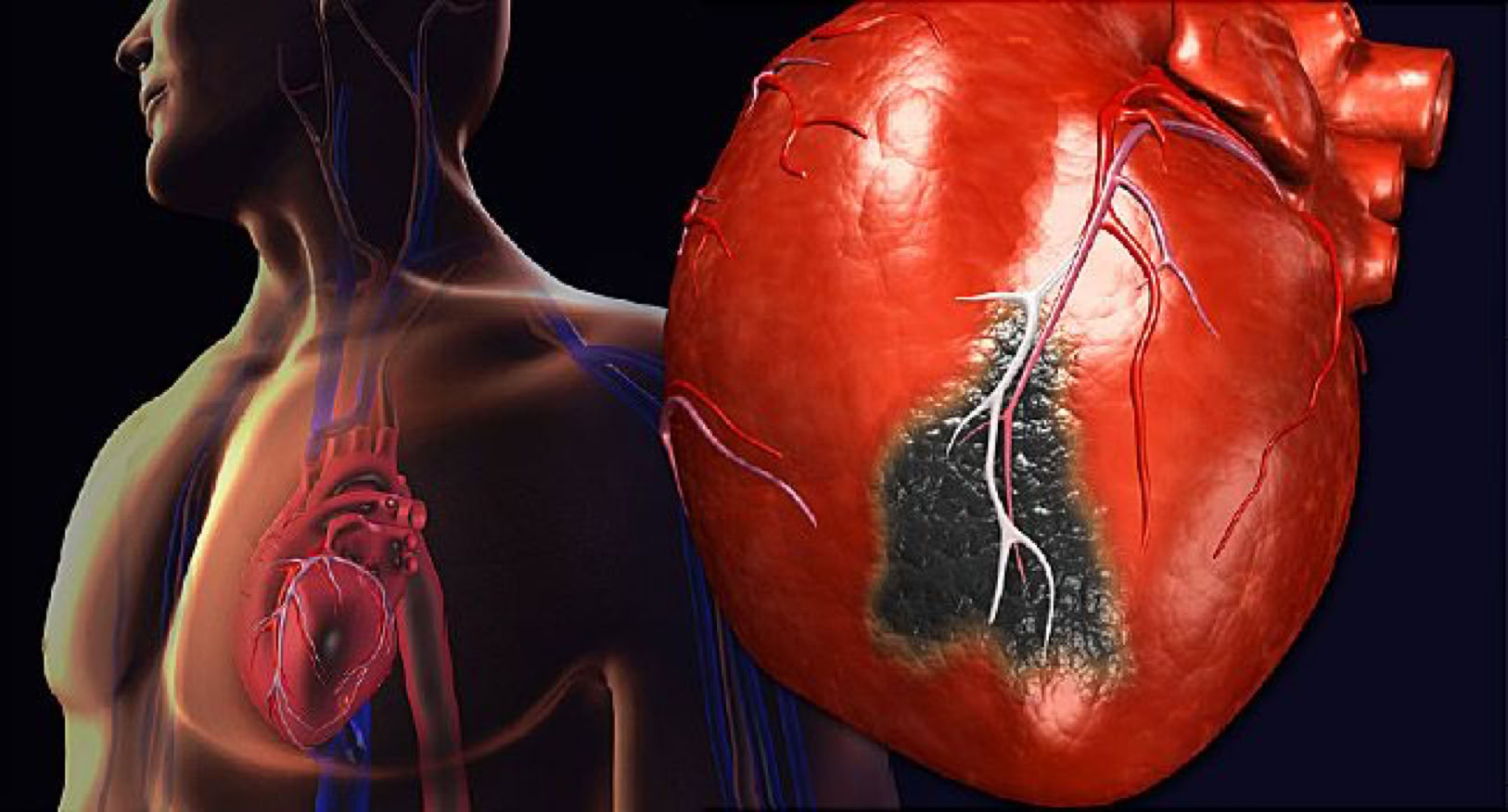
In extreme cases, a total blockage of the artery can result in heart muscle death (Heart Attack or Myocardial Infarction, MI).
Arteriosclerosis can also affect other arteries, including those in the brain and those that supply the arms and legs.
Coronary artery diseases can also cause complications if plaque becomes dislodged from the artery wall or if damage in the artery results in the formation of a blood clot.
Thrombus: blood clot that stays in the wall of the blood vessels.
Embolus: is when this thrombus dislodged from the wall of the blood vessel and goes into the blood flow.
Ischemia and Myocardial Infarction:
When an embolus (Blood Clot) blocks the coronary artery, the heart muscle supplies by that vessel does not get enough oxygen, creating a condition called ischemia
Ischemia: pain cause by a lack of oxygen and blood
If ischemia in not treated, it may results in myocardial infarction (MI).
Myocardial infarction (MI) or heart attack:
Caused by complete block of blood flow to heart muscle, which results in tissue death.
Area of dead tissue may be large or small. Can result in serious heart damage or death.
Symptoms of a heart attack:
sudden severe pain in the chest, usually on the left side
skin color maybe pale or cyanotic (bluish)
anxiety- sense of doom
cold and clammy skin
Cyanosis:
skin that is pale, blue or gray, due to low levels of oxygen in the bloodstream
Angina pectoris:
the medical term for chest pain, pressure, or discomfort due to coronary artery disease.
Congestive Heart Failure
Congestive heart failure occurs when the heart is unable to pump effectively.
It can be caused by many heart diseases, including myocardial infarction and hypertension.
The most prominent cause of heart failure is hypertension (high Blood Pressure). Congestive heart failure can cause syncope (fainting) in the patient.
Congestive heart failure can affect the right or left side of the heart.
If the dysfunction is in the right side of the heart, blood backs up into the large veins returning blood from the body to the right atrium, especially the jugular veins on either side of the neck.
If the dysfunction begins on the left side of the heart, blood will back up into the pulmonary veins and eventually into the lungs, causing fluids buildup.
This fluid can leak from the pulmonary capillaries and collect in the alveoli, resulting in dyspnea, orthopnea, and a productive cough with frothy sputum (phlegm coughed up from the lungs).
Untreated left-sided congestive heart failure will eventually cause right-sided heart failure.
Heart Valve Disease
The heart valves prevent regurgitation of blood as the heart pumps. Heart murmurs are cause by problems in the valves.
Regurgitation, also called backflow and it ccurs when blood leaks back into the chamber from which it is being pumped rather than moving further through the heart or into the artery.
Valve function may also be impaired by a problem that occurred before birth, called congenital defect.
The regurgitation caused by mitral valve prolapse and other heart valve diseases increases the workload of the heart.
The backflow of blood also increases the risk of blood clots.
As valve disease gets worse the patient may have lower extremity edema, weakness, chest pain, and heart palpitations.
The patient’s signs and symptoms might not reflect the severity of the diseases and can range from medications to surgical valve replacement.
Hypertension
Hypertension, or high blood pressure, can be a chronic disease on its own or a sign of other diseases of cardiovascular system.
Hypertension is diagnosed when a person’s blood pressure consistently measures 130/80 mmHg or above.
High blood pressure can occur without noticeable symptoms and can progress undetected until it causes a stroke, heart failure or kidney damage.
The cause of the hypertension is often hard to find, but certain risk factors are known to contribute:
Smoking
Obesity
Diet high in fat
Diet high in sodium
Stress
Heredity
Treatment consists of medication, monitoring, and lifestyle changes.
Signs and symptoms of hypertension include the following